
Baltimore People Directory Coverage
Baltimore people directories are split among agencies and institutions. Current public-role searches are strongest for City Schools staff, Johns Hopkins faculty and staff, property owners, licensed professionals, and business agents. Historical residents appear in city and reverse directories, tax books, municipal name cards, and local-history collections. The keeper matters because each directory describes a different relationship. A university profile does not prove residence, and a tax owner may not occupy the parcel.
| Baltimore directory | People or roles listed | Keeper | Access |
|---|---|---|---|
| City Schools staff | District employees and titles | Baltimore City Public Schools | Free name filter |
| Johns Hopkins people search | Faculty and staff | Johns Hopkins University | Free, detail varies |
| City Civil Service roster | Municipal employees and service details | Baltimore City | Inspection at reasonable hours |
| City property tax search | Owners tied to parcels | Baltimore City Finance | Free owner search |
| Maryland license queries | Licensed people and businesses | State boards | Free online |
| City and reverse directories | Past residents and address occupants | BCA and Enoch Pratt Library | Digital, microform, or onsite |
Start with the directory that fits the known tie. Use the school portal for district staff, the university search for an academic affiliation, City Finance for a known owner or address, and a license board for a regulated trade. For a past Baltimore resident, shift to dated volumes at the Baltimore City Archives or the Enoch Pratt Free Library. Those sources preserve context that a current name list cannot.
Baltimore Schools Staff Directory
The Baltimore City Schools staff directory filters the current district employee list by name. It was launched in June 2024 as an automatically updating directory, and the inspected portal showed 145 pages. Results are staff cards rather than student records. Lead-agency and third-party workers may be absent, so a failed search is not proof that a person has no school connection.
| Directory control | Type | What it does |
|---|---|---|
| Search | Text | Filters by staff name |
| Pagination | Numbered controls | Moves among result pages |
| Jump to Page | Input | Goes to a selected page |
| Staff card | Result | Shows name, title, image when supplied, and an email action |
The official school directory shows the working search surface:
View the Baltimore City Schools staff search at its source.
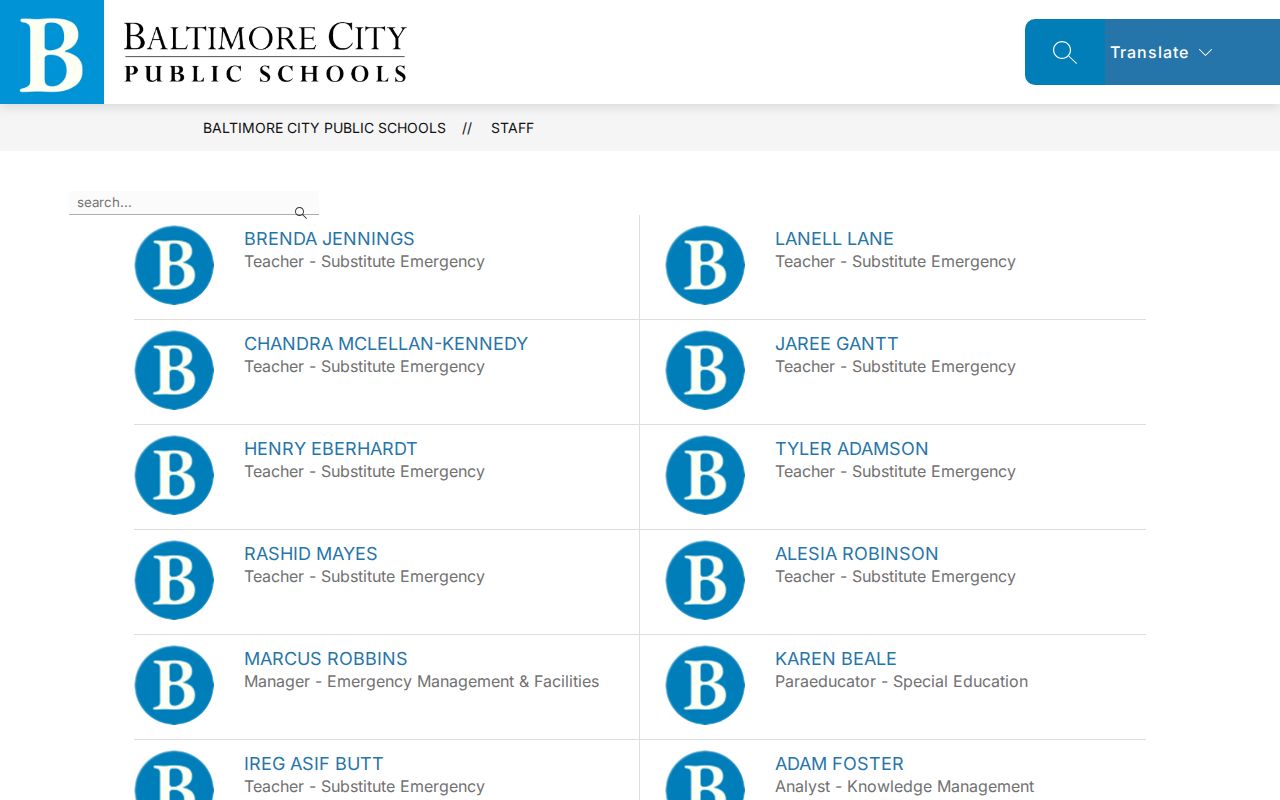
The name box, staff cards, and page controls make it useful for confirming a public school role and title, not a home address or other private detail.
When no card appears, check the district department directory or an individual school page. Those sources can identify the unit and a main contact. The City Schools directory does not expose dates of birth, personal phone numbers, home addresses, or student information.
Johns Hopkins People Directory
The Johns Hopkins people search covers faculty and staff across university divisions. Its main field expects “Last name, First name.” A surname result can lead to a profile, though off-campus users may see less detail. Department pages add role and subject filters, which help separate people who share a surname.
Open the Johns Hopkins directory source used for this search view.
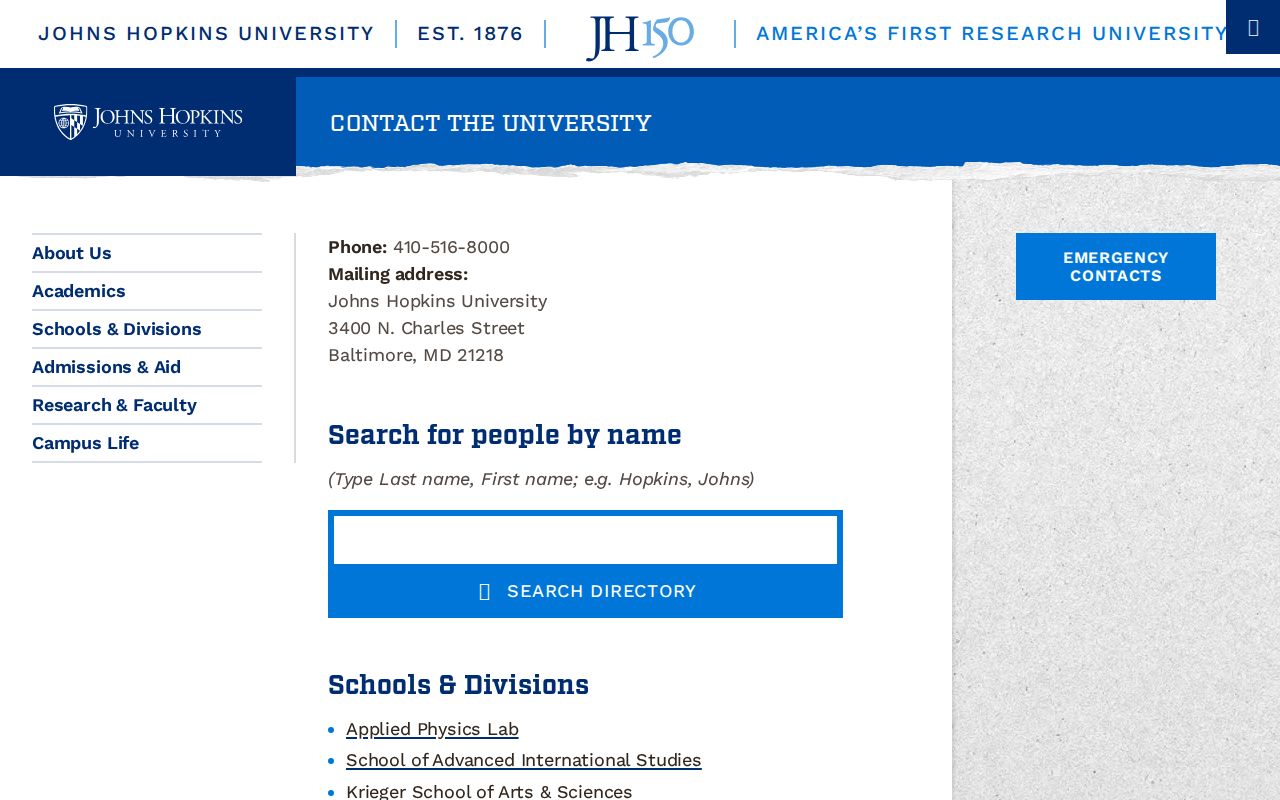
The screenshot confirms the university’s surname-first format, a small but vital detail when a natural first-name-first query finds nothing.
| Name | Full or preferred public name |
|---|---|
| Role | Faculty, teaching, research, staff, affiliate, or emeritus category where published |
| Contact | Institutional email, office, and phone when public |
| Affiliation | Appointments, department, lab, or program |
| Profile context | Research interests and education on some department pages |
A profile records an institutional affiliation at the time shown. It is not an open alumni directory, and it should not be used to infer where someone lives.
Baltimore Government Directory Routes
No verified unified online directory lists all Baltimore City employees. The City Number Directory is an agency and senior-official phone list, while Charter Article VII §101 makes the Civil Service roster open to inspection at reasonable hours. That roster may show an employee’s name, job action dates, compensation, title, duties, and a termination date or cause when applicable.
| Person lookup | Civil Service roster or agency-specific directory |
|---|---|
| Title and unit | Roster, school staff card, or department page |
| Work phone | City Number Directory or department main line |
| Work email | Published only on some staff and agency pages |
| Office location | Agency page or official directory when released |
| Fallback | Ask the agency to inspect the public roster |
If a name is absent, identify the department first, call its main line, and ask how to inspect the roster. A specific Maryland Public Information Act request can seek an existing record, but the full procedure belongs in the Baltimore public records resource. Do not replace a missing Baltimore City result with Baltimore County data; the two governments are separate.
Baltimore Property Owner Directories
Property systems act as Baltimore people directories when a name or address is tied to ownership. The Baltimore City real-property tax portal accepts an owner name, property address, or block and lot for a chosen fiscal year. Maryland SDAT displays assessment and transfer details but does not offer owner-name search. CityView adds the mapped parcel and its stable identifiers.
The path is simple: owner name or address → City tax account → block and lot → SDAT assessment → MDLandRec deed. An owner is not always an occupant. For past occupants, a reverse directory is the better source.
Portal distinction. Search the Baltimore City tax site by owner name; use SDAT after the parcel is known because SDAT does not search owners.
Maryland Professional Directory Search
The Maryland Labor professional queries provide a free surname search across 26 occupational boards. The roster includes fields such as architects, barbers, cemetery oversight, electricians, home improvement, engineers, real estate, locksmiths, plumbers, and tax preparers. Separate official lookups cover physicians, nurses, and attorneys.
See the Maryland universal license query and its board choices.
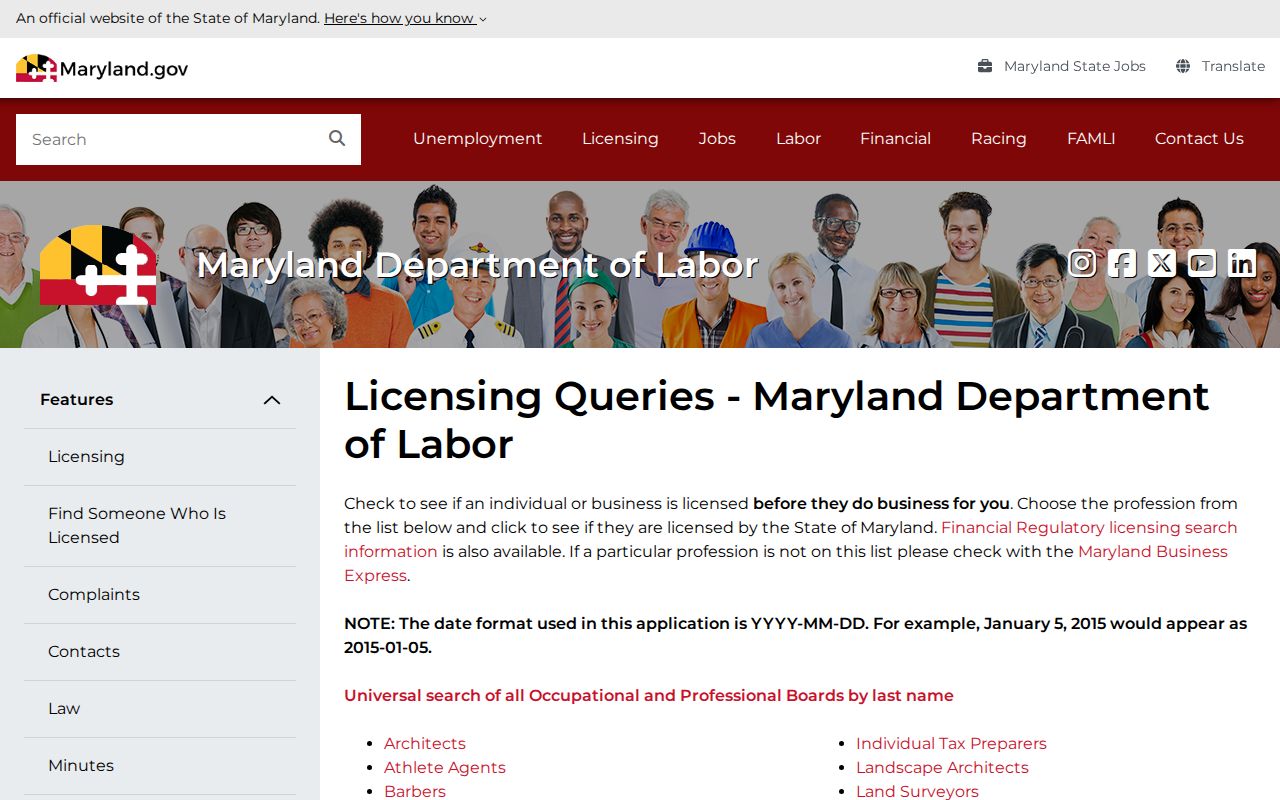
The captured page shows the surname field and board selection, which lets a Baltimore directory search narrow a common name by profession.
A license result can establish the public status of a credential and the board that issued it. Physician profiles may add license dates, education, specialty, public practice address, and disciplinary history. The Maryland Business Express directory instead searches business names, Department IDs, and EINs, then links entities to resident agents and filings.
Pratt Baltimore Reverse Directories
The Enoch Pratt Maryland Department holds city directories, reverse telephone directories, and statewide phone books from the early 1920s. Ordinary volumes run from surname to address. Reverse, or criss-cross, directories run from an address to the listed occupant, making them especially useful when only an old house number is known.
Review the Pratt Maryland Department’s Baltimore directory collections.
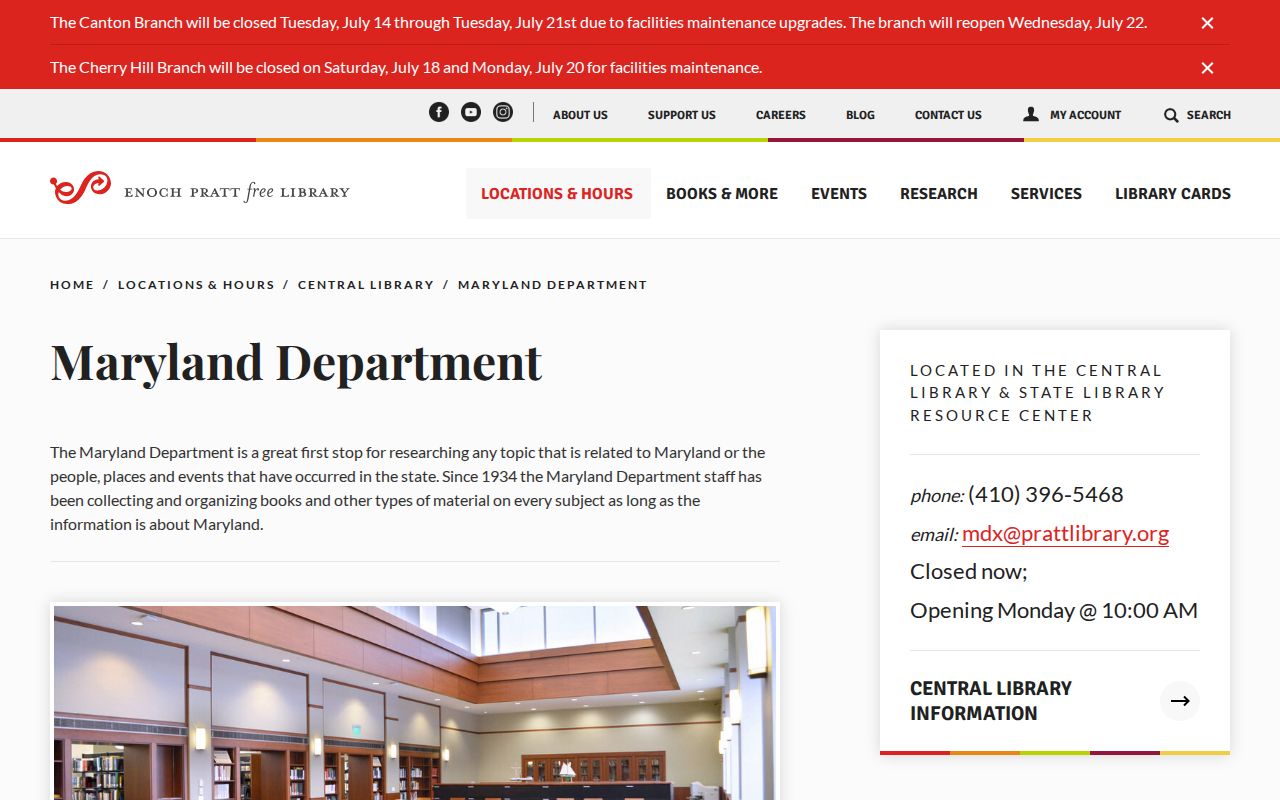
The collection view points researchers toward both name-first and address-first sources rather than treating a modern phone search as complete.
Pratt also holds more than 24,000 photos, over 300 biography-card drawers, and more than 300,000 clipping items on 7,000-plus subjects. These separate collections can distinguish same-name Baltimore residents through a role, neighborhood, organization, or dated event.
Baltimore WPA Name Directory
The Baltimore City Archives’ WPA Historical Records Survey name index is an unusual people-first doorway into municipal papers. Workers in the 1930s created alphabetical cards for names found in selected record groups. When the underlying papers were reorganized in 1982, their item numbers were retained, so a scanned card can still point toward the related archival file.
This Baltimore directory is selective, not a resident census. Record the spelling, item number, subject, and any date from the card. Then consult the current BCA record-group description or ask archives staff to translate the old reference. The method can uncover a person whose name sits inside subject-arranged municipal records and would not appear in a conventional catalog search.
Baltimore Directories Since 1752
The Baltimore City Archives directory inventory begins with a 1752 edition, decades before the 1796 city charter. Later holdings include ordinary resident books, business directories, stranger’s guides, social registers, Colored Business editions, transit lists, and city-and-suburbs volumes. Edition type matters because absence from one list does not prove absence from Baltimore.
Browse the archive’s edition-by-edition Baltimore directory inventory.
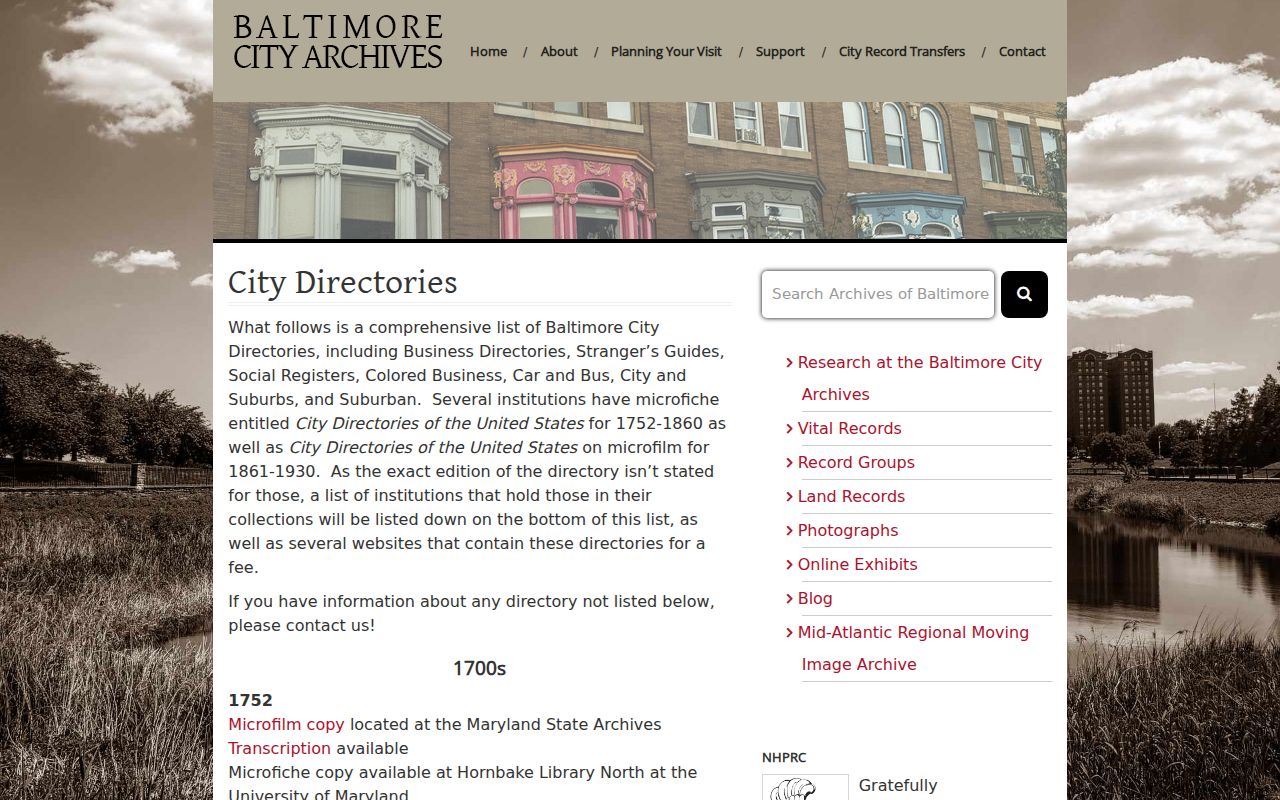
The archival inventory shows the depth and variety of the series, helping researchers choose the right year and directory type before requesting a volume.
- Ordinary directory
- A surname-first list that may show an occupation and address.
- Reverse directory
- An address-first or telephone-first list used to identify a listed occupant.
- Business directory
- A trade or firm list that may connect a person to a commercial role.
- Liber and folio
- The book and page reference used to retrieve a recorded deed.
A practical historical chain is old address → directory or reverse directory → address-arranged assessment → block map → deed book → tax books and newspapers. Baltimore’s block number often survives a changed street name or house number. About 70 digitized city directories from the early 1800s through the 1920s are linked through Pratt’s genealogy guide; other editions remain on microform or require archive access.
Note: Baltimore’s directory gap is layered custody and shifting indexes, not a documented catastrophic courthouse fire.